
Rapid Prototype Development for Consumer Electronics in the Car
Inductive Charging (In-Cabin / Qi2)
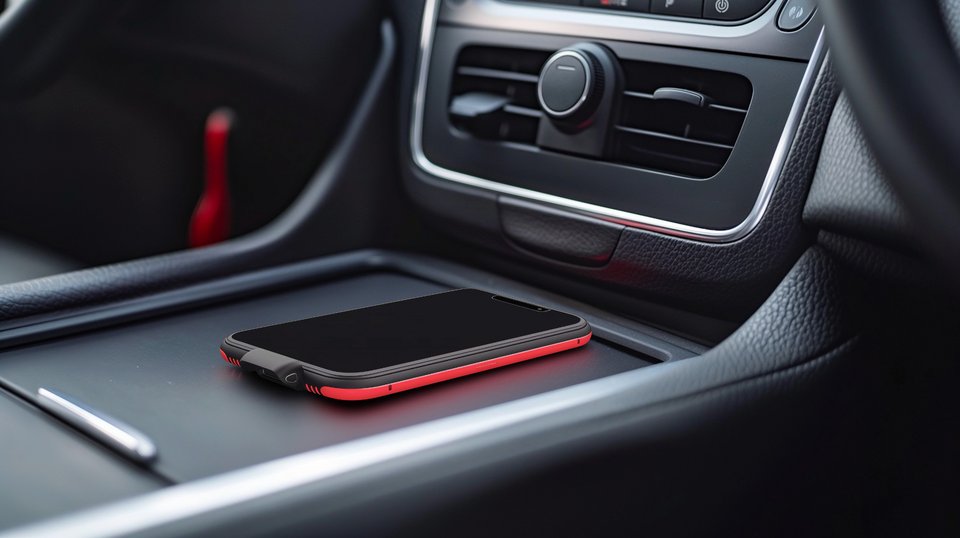
As part of a joint development project, PACK LitzWire supported a customer in implementing coils for Qi2-enabled in-cabin charging pads. With the introduction of Qi2 and Qi2.2, charging power requirements increased to up to 25 watts, while the modules had to be integrated into extremely compact vehicle consoles. At the same time, heat generation in the end device could not lead to a reduction in performance, as modern smartphones automatically throttle when overheated.
The Challenge
The severely limited installation space in the interior met increased power density and demanding electromagnetic boundary conditions.
- Thermal Management: Heat dissipation was critical, as excessive temperatures immediately lead to a reduction in charging power.
- Manufacturing / Mechanics: The litz wires had to allow for small bending radii and complex coil geometries without compromising the dielectric integrity of the very fine individual wires.
- Electromagnetics: Parasitic inductances and stray fields had to be kept low to ensure high coupling efficiency in the Qi2 system.
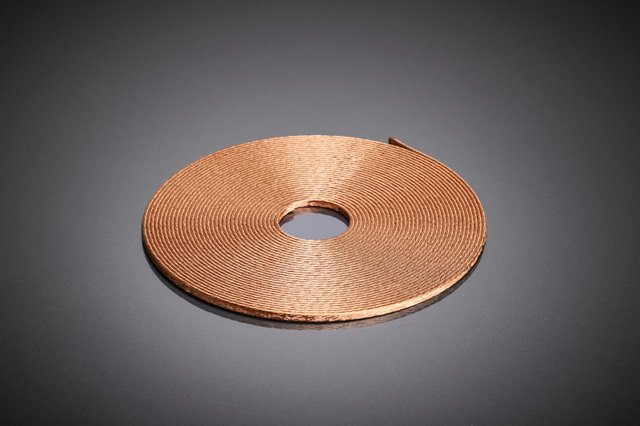
The flat-designed coil with RUPALIT® Profile litz wire forms the basis for compact Qi2 in-cabin charging pads and supports efficient energy transfer with limited installation space and increased power density.
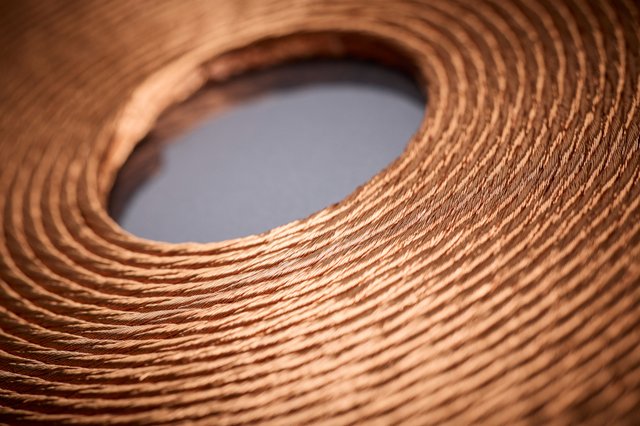
The finely structured HF litz wire enables tight bending radii and stable winding geometries, helping to specifically reduce thermal loads and electromagnetic losses in Qi2 charging systems.
Support from PACK LitzWire
PACK LitzWire worked closely with the customer's development engineers and provided targeted project and prototyping support.
- Sample Service: Within a short time, small quantities of various HF litz wire prototypes were provided, enabling real comparative measurements in the customer's EMC and thermal laboratory.
- Design Iteration: Together, parameters such as single wire diameter, number of strands, lay length, and insulation thicknesses were varied to find the optimal compromise between installation space, mechanical flexibility, and electrical performance.
- Material Selection: PACK LitzWire recommended suitable enamel types (polyurethane, self-bonding wires) for the production of compact, self-supporting self-bonding coils that simplified the manufacturing process and improved the geometric stability of the windings.
Result
Thanks to the rapid provision of samples and close development cooperation, the customer was able to compare several coil designs and finally validate a solution that stably achieved the full Qi2 charging power of 25 watts despite the very limited installation space, without exceeding the thermal limits of the smartphone or the vehicle environment.
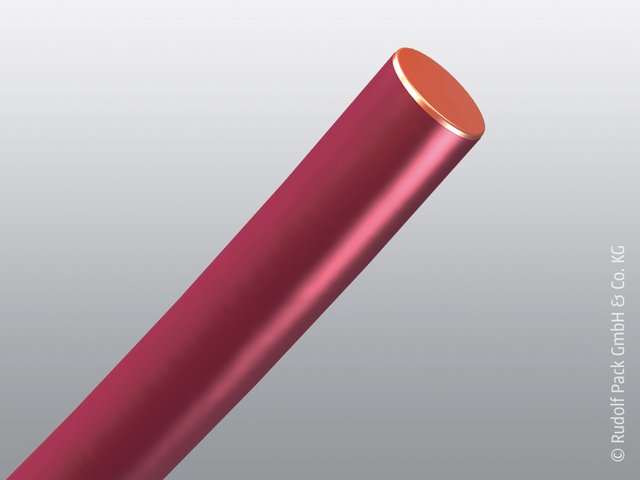
RUPALIT® Profil
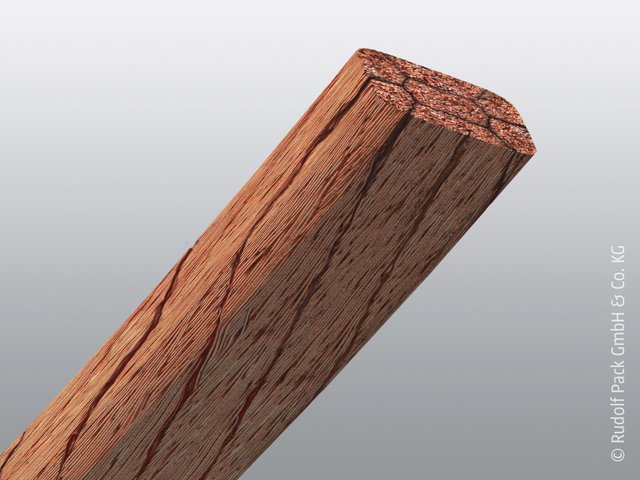
RUPALIT with profiling. Use square or rectangular cross-sections to optimally utilize your winding space and measurably increase power density. RUPALIT® Profile is the first choice for engineers who want to maximize every percent of installation volume without losses.
Rutherm®
Combine electrical function with mechanical fixation to realize compact windings without additional resin encapsulation. RUTHERM® stabilizes your small coils and sensors permanently and cleanly for maximum precision.
Technical questions deserve precise answers.
Would you like to coordinate specifications or request a sample production? Our specialist departments will advise you directly – competently, bindingly, and reliably.

Product Manager

Internal sales team